

Quo Vadis Barrique?
A perspective—or better, an assessment—of where the journey of the wooden aging barrel will lead in the future.
In short: why the fuThe debate about the ideal wooden barrel has accompanied winemakers, distillers, and vinegar producers for decades.
Few topics are discussed as passionately as the choice of the right oak, the finest growth rings, the “true” origin of the wood and barrel, and the perfect toasting. For many, the barrique—whether 225 L or 300 L—is the barrel of choice when it comes to premium quality.
One could almost think of it as a religion. But reality is changing. And it forces us to rethink.

The Forest as a Resource – More Valuable and Scarcer Than Ever
Western consumer countries are experiencing declining alcohol consumption, while forests are under increasing pressure: climate change, political interests, conservation conflicts, and numerous other users such as hunters, hikers, and mountain bikers.
At the center lies the question: Should the forest be left to itself, or actively cultivated?
The answer: both. At least for us—as a cooperage, carpentry, and sawmill—we use only wood from managed forests. But it takes a long time for a felled tree to grow back…
In detail, this means for barrel production: high-grade timber—slow-grown, fine-grained oak trunks that are several hundred years old—is becoming increasingly rare and therefore more expensive.
The consequence for us as a cooperage: We are using an extremely valuable raw material for a product that is often in use for only a few years. A classic barrique becomes sensorially “empty” after three to four fillings, and after at most ten years it often ends up as decoration or firewood.
An ecological and economic waste that is hardly acceptable today.
From Log to Stave – A Look Inside the Sawmill
The path from a felled trunk to barrel wood is long. Only a very small portion of an oak trunk meets the strict requirements for barrel staves. There must be no knots, no worm or beetle infestation, no spiral grain. We need a certain thickness and exceptionally straight grain.
And that’s only the beginning. To cut a trunk into raw staves, a highly complex method with considerable waste is used: the mirror cut. This technique ensures the tightness of the barrel, as it cuts parallel to the medullary rays—the “veins” of the wood.
Every step—drying, splitting, sorting—requires time, energy, and skilled craftsmanship.
And precisely because of this, the question arises: Is it still responsible to use such scarce material for barrels with such a short lifespan


The Answer From Our Workshop: Thinking Bigger
At Wilhelm Eder Cooperage, we have drawn the necessary conclusions. In the tension between climate change, raw material scarcity, and modern vinification, we are increasingly focusing on barrels with:
- Larger capacity
- Greater stave thickness
- Regional German oak
- A life cycle spanning several decades
A 600 L large barrel—round or oval—can be used for up to 100 years with proper care! With modern cellar technology and precise vinification processes, these barrels provide gentle micro-oxygenation, elegant fruit expression, and an exceptionally harmonious maturation.
White wines benefit enormously: they gain structure without losing freshness.
But red wines also show impressive finesse and depth—without the dominance of fresh barrique notes. .
From Barrel to Future – Sustainable Premium Quality
Many winemakers are surprised by how economical this type of barrel is.
Considering both volume and lifespan, a Halbstück or Stückfass is virtually unbeatable—and offers:
- 100% Palatinate, Spessart, or Swabian oak
- 100% sourced from sustainably managed forests
- 100% German craftsmanship
- 100% quality
- 100% pure
We believe: The future of premium aging lies not in small barrels, but in durable, sustainable large barrels—regionally produced and built for generations.
Conclusion: It Is Time to Rethink the Barrel
Premium wines do not necessarily require a small barrel. They require the right barrel!
Whether 600 L or up to 10,000 L—round or oval—we build long-lasting barrels that align with both modern cellar management and our responsibility toward the forest.
Join us on the path toward a sustainable and future-oriented barrel culture.

Barriques
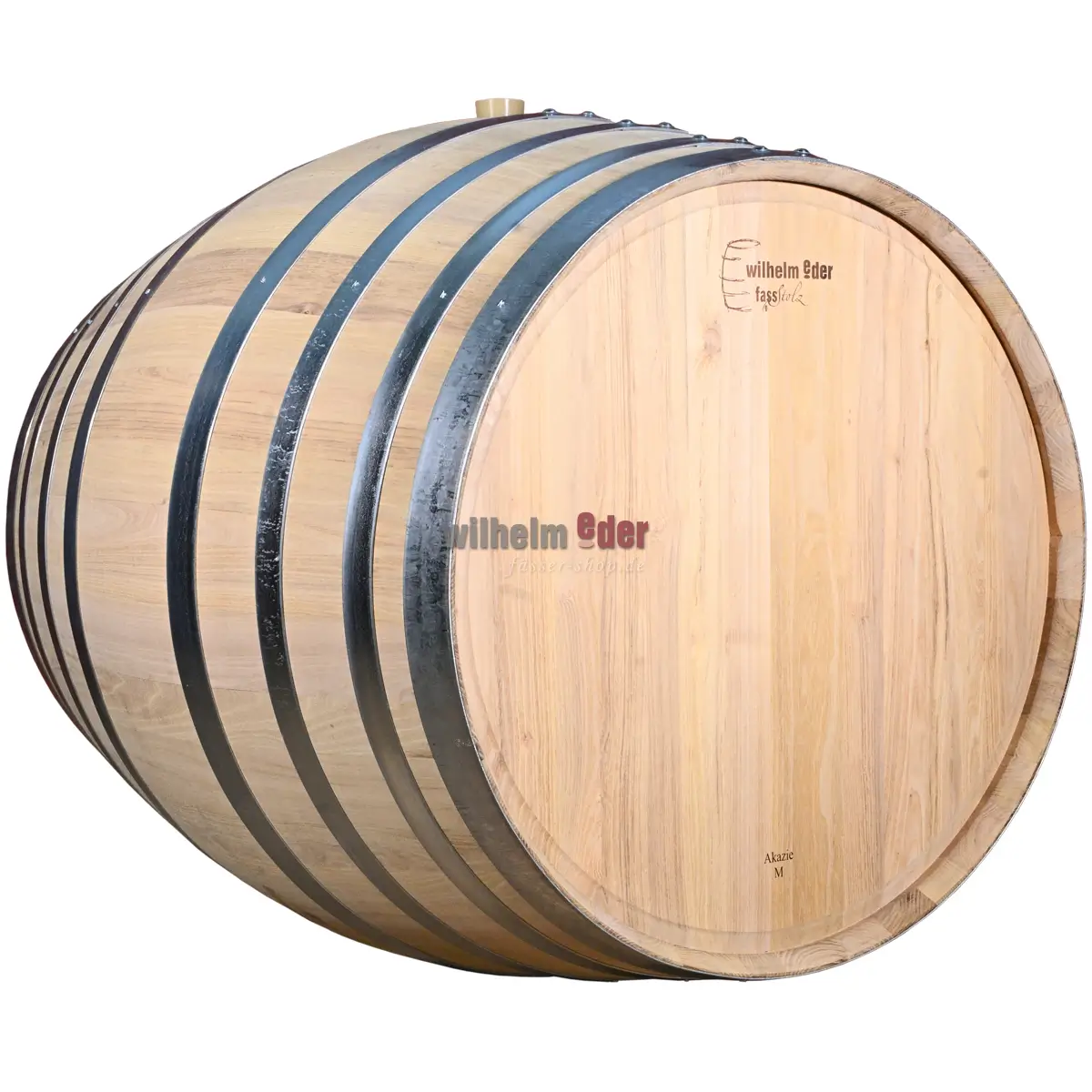
Produced from the "false acacia", the European robinia.The barrel is intended for distillates, with a strong toasting it brings strong structures of bacon and ham for the maturation of whisky or grain brandies.Lightly toasted or in the second filling, it is ideally designed for maturing a fine plum - the barrel then brings a fine sweetish flavor-enhancing note to the plum.In the wine segment, the acacia brings fine fresh notes paired with honeydew melon and herbs, e.g. for Riesling - but then only lightly toasted here too.The barrel is made of split wood. 8 hot-dip galvanized hoops.
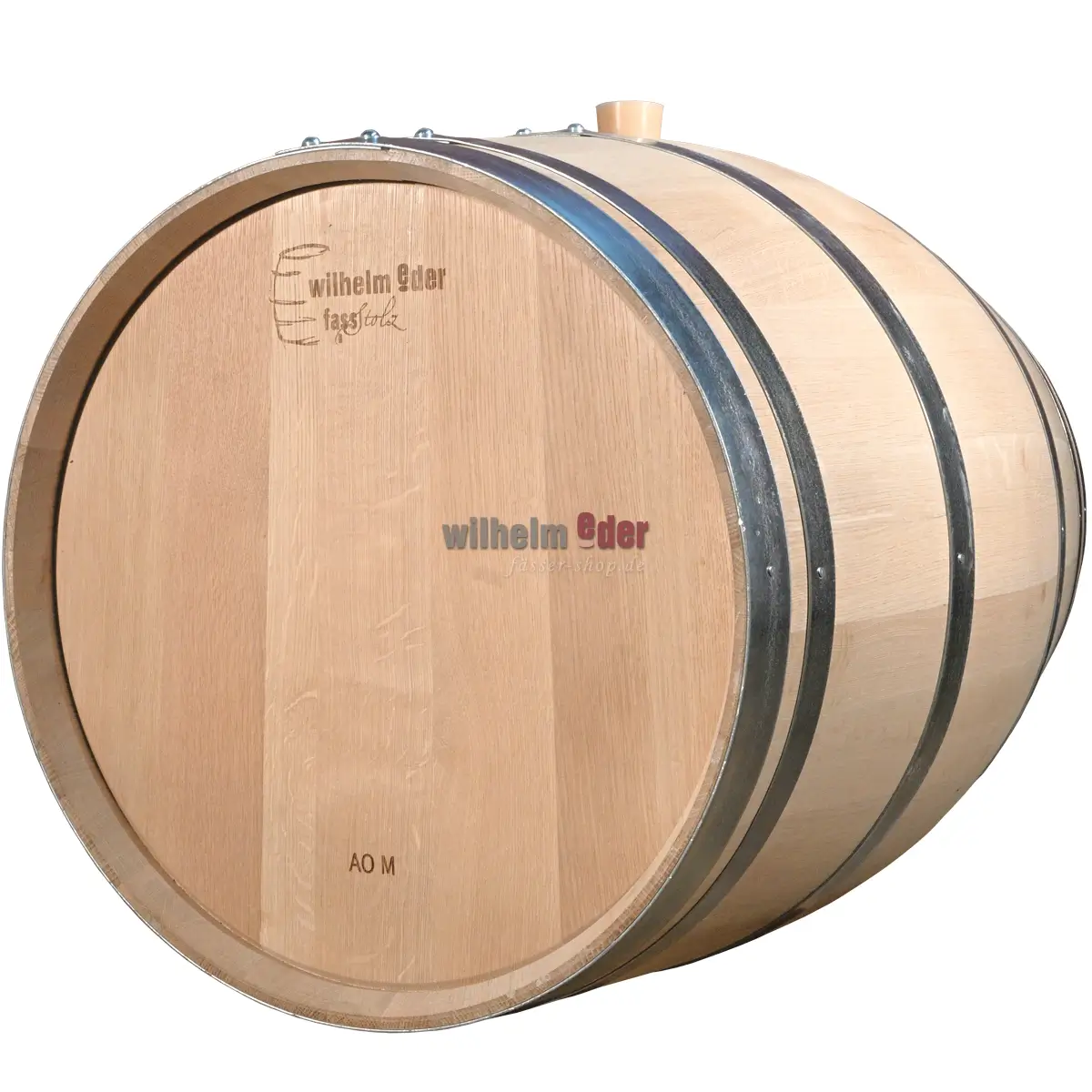
These barrels made from American white oak from German production are not only particularly attractive due to their soft and vanilla-like sensory characteristics, but also due to their optimized cost structures. Toastings:MediumMedium PlusChar 3Medium Plus + Char 3 (Double Toast)Forte Toast Toasted heads, with silicon bung
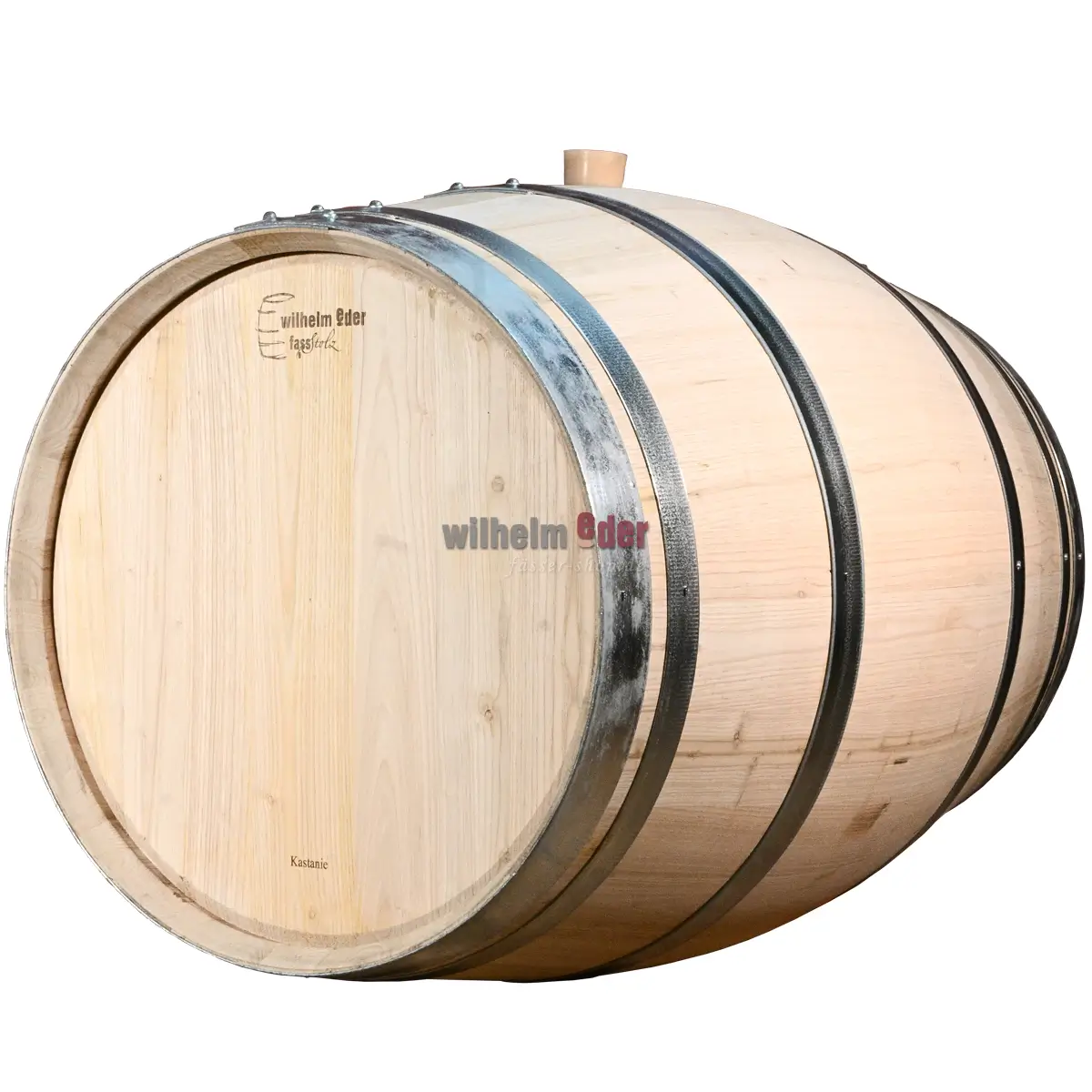
It was the Romans who probably brought us the sweet chestnut from the Caucasus. In the meantime, the warmth-loving tree has become native to southern Germany and especially to the Palatinate Forest.Heat-loving in this context does not mean dry-loving!Our wood for our barrel series "Eder FassStolz Kastanie" comes from one of the most beautiful and best areas in Germany for the sweet chestnut, the Wasgau near the Trifels Castle in the heart of the Palatinate Forest!Year after year, with the end of the vegetation phase from October, November onwards, we work together with the foresters to select some of these trees, sometimes several hundred years old, under the aspect of sustainability and climate protection, in order to produce particularly valuable wine and distillate barrels from them.By the way, the chestnut was the tree of the year 2018!The fruit of the trees is also used in culinary delights, whether in soup, bread or in some game dishes! The chestnut gives a full, round aroma without, however, bringing the sometimes too many tannins of the oak noticeably on the tongue. Especially in distillates one tastes the depth, the forest and the fruit of the chestnut paired with honey notes. The chestnut gives a strong golden yellow color to the distillate.For strong structured red wines the chestnut barrel offers a great maturity as well as a round sweetness. We recommend the chestnut barrels especially in the toasting stages Medium to Forte!The barrel is equipped with a silicone bung as standard.
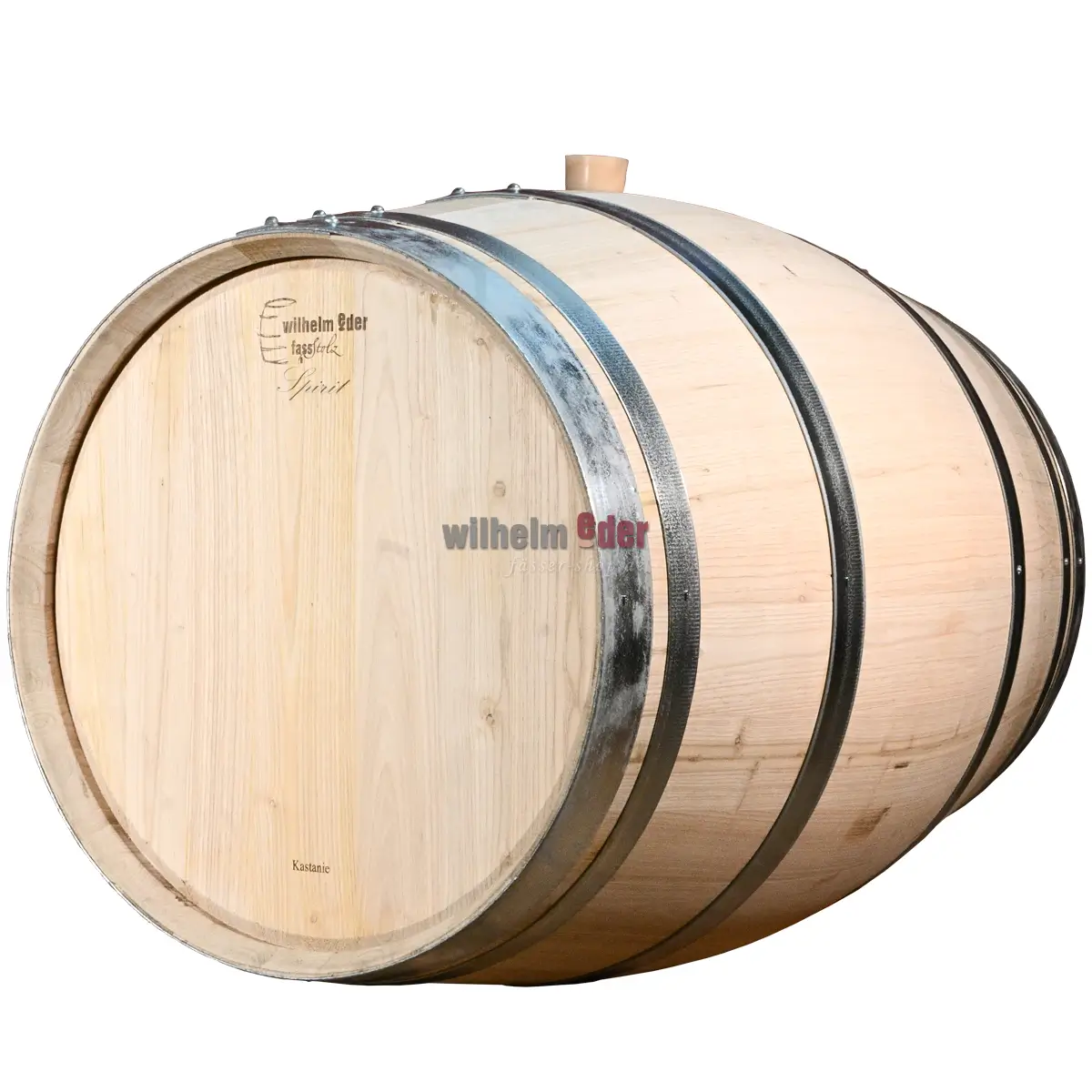
Barrique made of chestnut wood 228 l with silicone bung. One barrel equipped with a double toast for full volume and power. For high character in mouthfeel and complexity. Ideal for maturing grain, whisky and brandies. It was the Romans who probably brought us the chestnut from the Caucasus. In the meantime, the warmth-loving tree has become native to southern Germany and especially to the Palatinate Forest.Heat-loving in this context does not mean dry-loving!Our wood for our barrel series "Eder FassStolz® Kastanie" comes from one of the most beautiful and best purchasing areas in Germany for the sweet chestnut, the Wasgau region near Trifels Castle in the heart of the Palatinate Forest!Year after year with the end of the vegetation phase from October, November onwards, we select together with the foresters some of these trees, sometimes several hundred years old, under the aspect of sustainability and climate protection, in order to produce especially valuable wine and distillate barrels from them.By the way, the chestnut was the tree of the year 2018!The fruit of the trees is also used in culinary delights, whether in soup, bread or in some game dishes. Toast Spirit: Medium Plus Toast + Char 4The barrel is equipped with a silicone bung as standard.
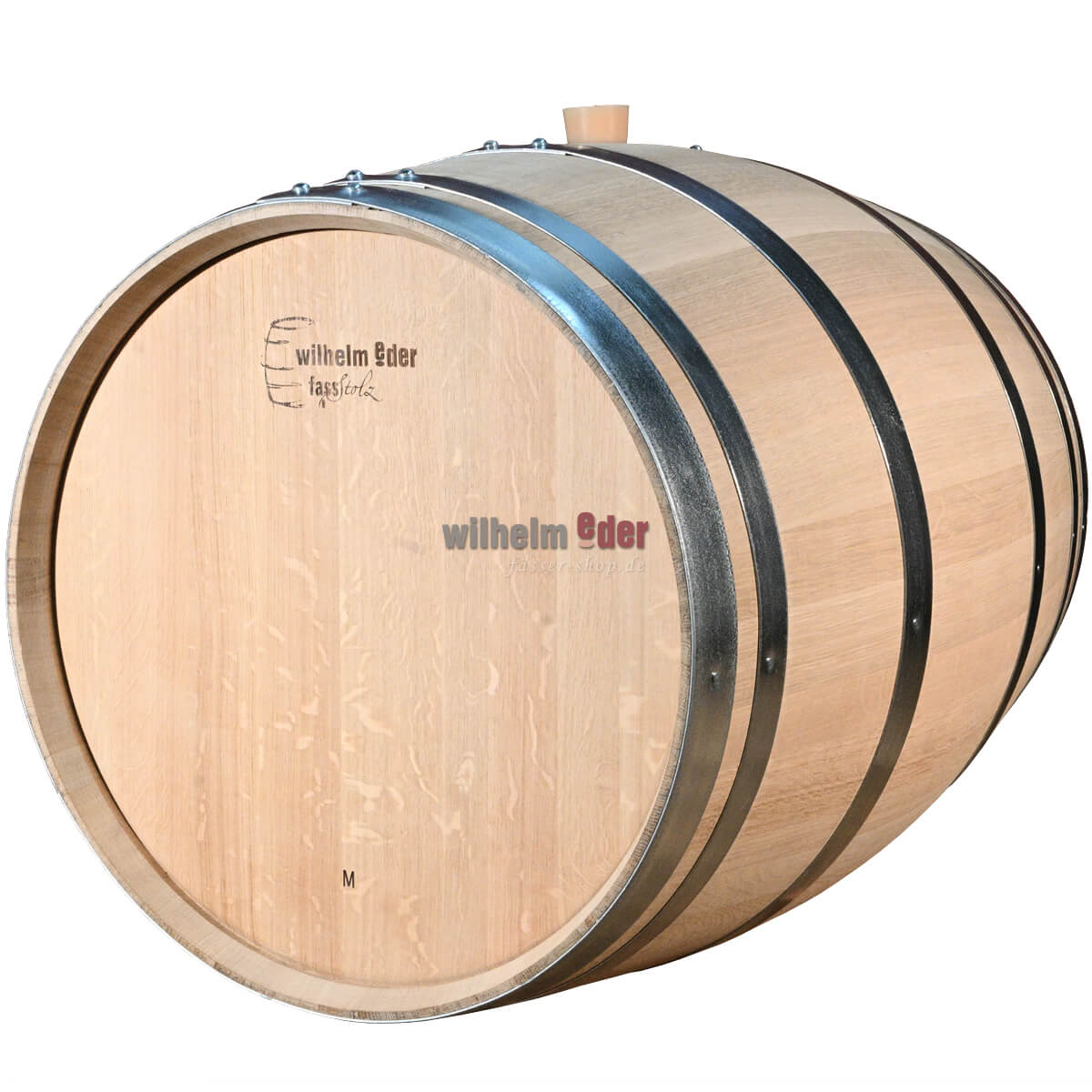
German oak barrique 228 l with silicone bung.Made from seasoned oak wood, origin Palatinate Forest / Northern Vosges.Matured on red sandstone for approx. 200 years, sustainably harvested.We store the wood for 36 months to achieve the optimum aroma spectrum.These barrels are suitable for white and red wine as well as for fine distillatesToasting according to recommendation and intended use:Light: Gives wood structures to the wine, develops structure, makes the aroma of the fine mature wood perceptibleMedium: Fine tannin structures, toasted bread, vanilla, light caramelMedium Plus: Sweet vanilla, caramelized sugar, emphasizes the fruit of the wine, mocha aromasForte: Dark berries, coffee, caramel, coconut, smoked hamAll toastings are applied very slowly, as can be seen from the uniformity of the toastings without any burnt bubbles inside the barrel.
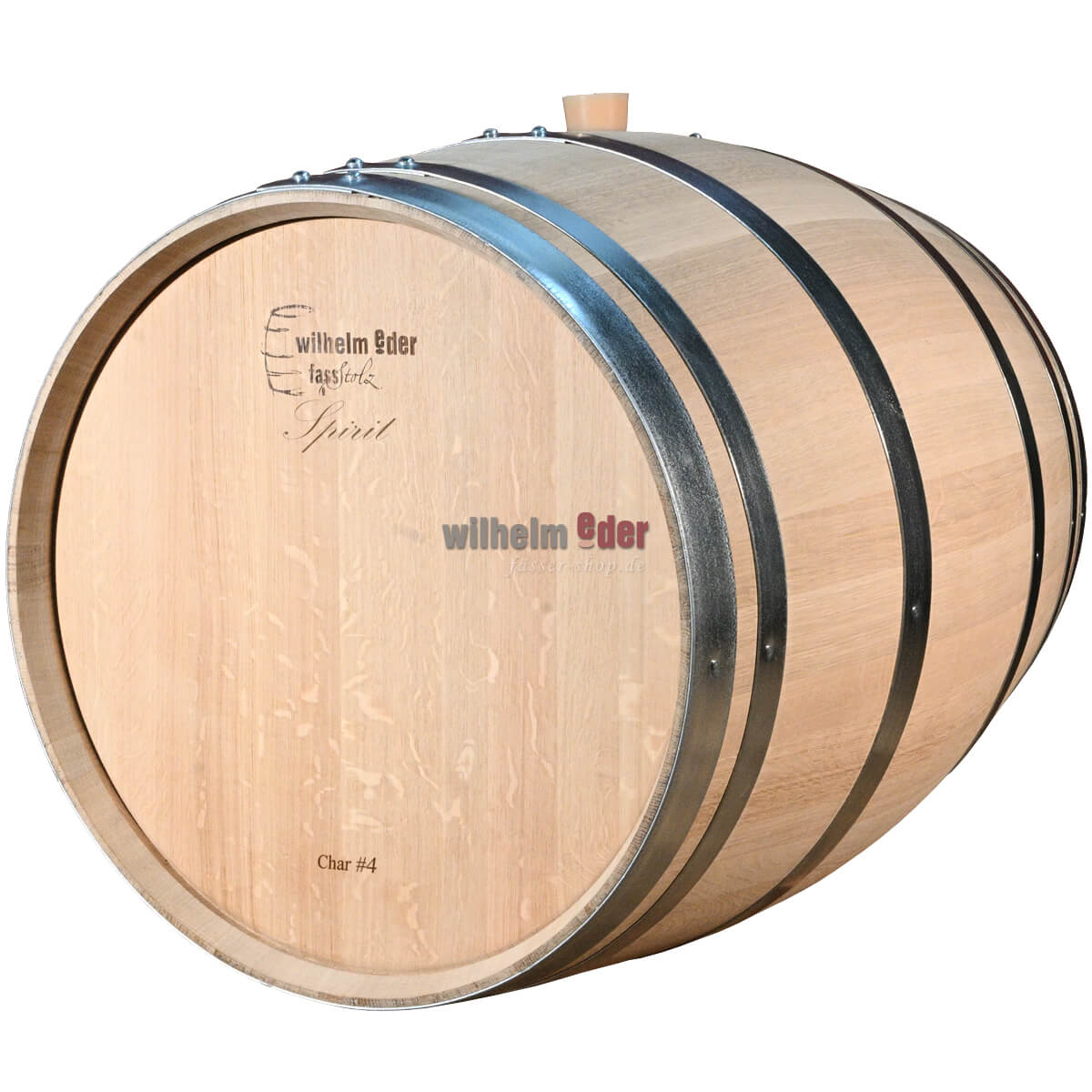
Barrique made of German oak 228 l with silicone bung. A barrel equipped with a double toast for full volume and power! First a Medium Plus Toast was toasted over an oak fire and then a Char IV by gas. Applied on German oak which captivates by its spice and sweetness, the toasting grant a very intensive color, high character in mouth feeling and complexity. Ideal for maturing grain, whisky and brandies. Made from seasoned oak wood, origin Palatinate Forest / Northern Vosges!Fine-grained on red sandstone grown about 200 years, sustainably logged. The wood is stored for 36 months in order to achieve the optimal aroma spectrum.
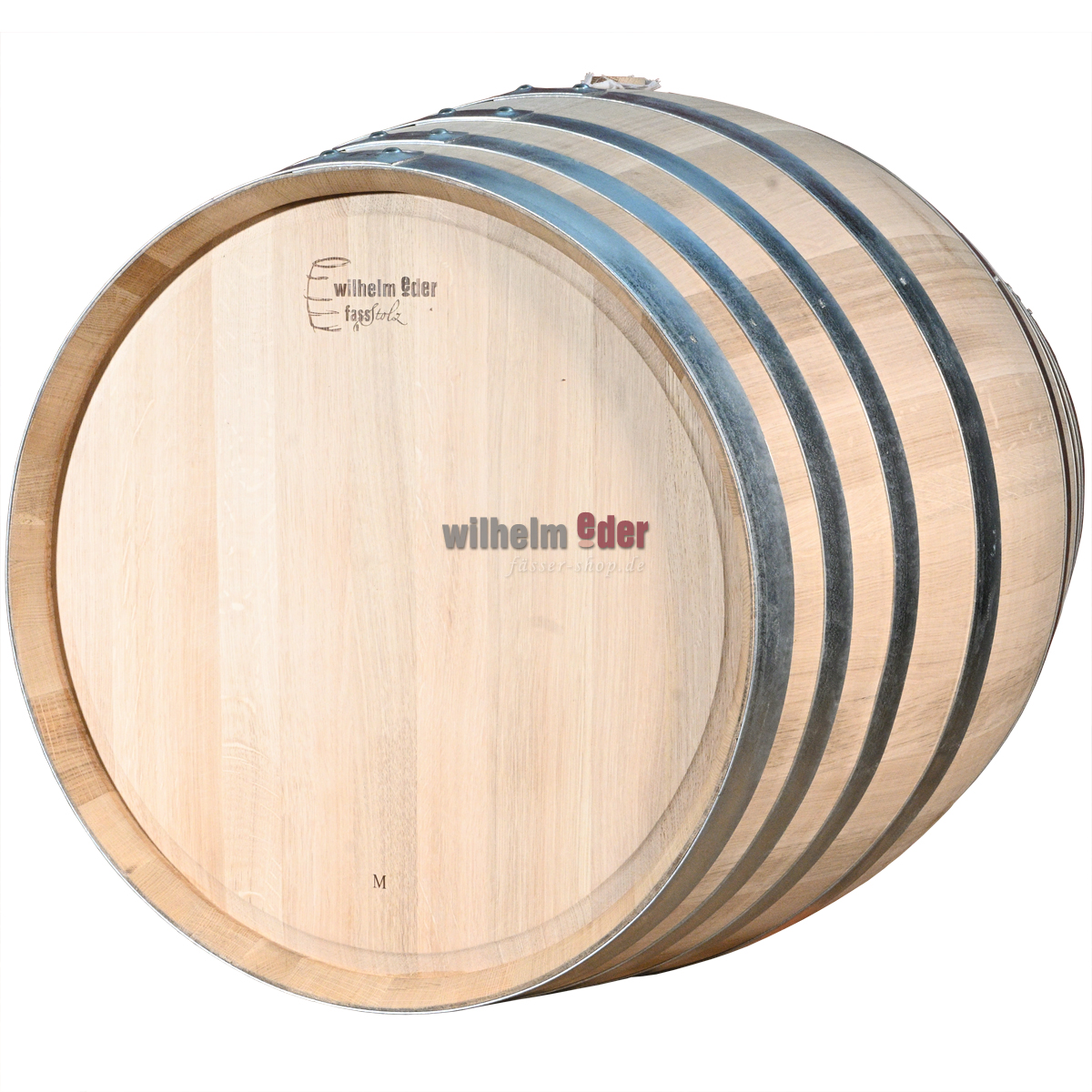
Made from seasoned oak wood, origin Palatinate Forest / Northern Vosges!Fine-grained on red sandstone grown about 200 years, sustainably logged. The inside of the barrel has been toasted over oak fire. The heads of the barrel are not toasted. Galvanized hoops.The origin of our wood is located in the 2.200 hectare forest of Annweiler. The wood grew in the time of Napoleon and will refine your wine. These barrels are suitable for white and red wine, as well as for fine noble distillates.Toastings:Light (White wine): Gives wood textures to the wine, elaborates a skeleton, the aroma of fine mature wood noticeable.Medium: Fine tannic structures, toasted bread, vanilla, light caramelMedium Plus: Sweet vanilla, caramelized sugar, emphasizes the fruit of the wine, mocha aromasAll toastings are applied very slowly, you can see it in the uniformity inside the barrel and without burn bubbles on the stave! Our toastings are depth acting to that effect.
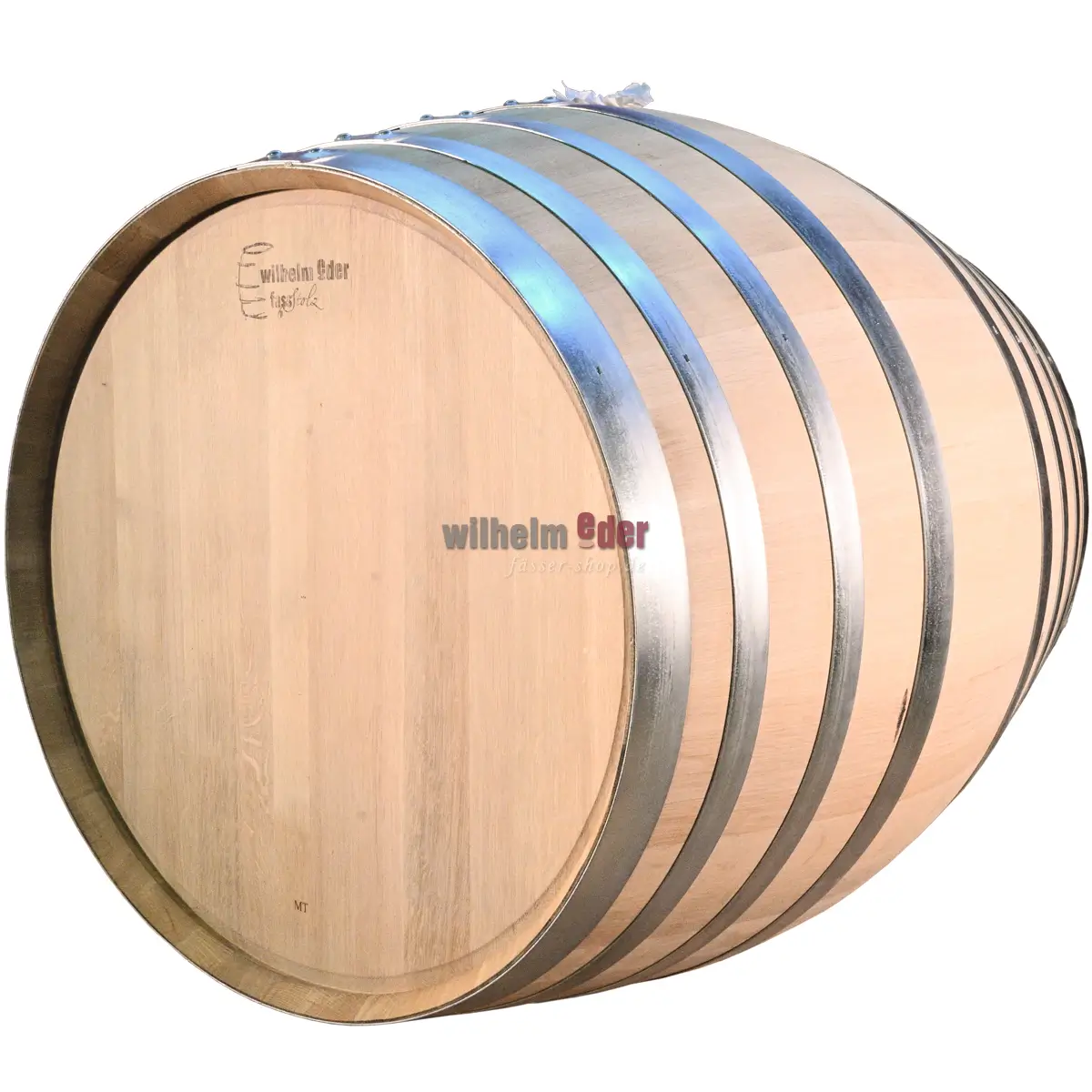
Made from seasoned oak wood, origin Palatinate Forest / Northern Vosges!Fine-grained on red sandstone grown about 200 years, sustainably logged.Produced from fine oak wood aged for several yearsGrowing area: Palatinate ForestHoops: hot-dip galvanisedToastings:Light: Gives wood textures to the wine, elaborates a skeleton, the aroma of fine mature wood noticeable.Medium: Fine tannic structures, toasted bread, vanilla, light caramelMedium Plus: Sweet vanilla, caramelized sugar, emphasizes the fruit of the wine, mocha aromasHeavy: Dark berries, coffee, caramel, coconut, smoked ham All toastings are applied very slowly, you can see it in the uniformity inside the barrel and without burn bubbles on the stave! Our toastings are depth acting to that effect.
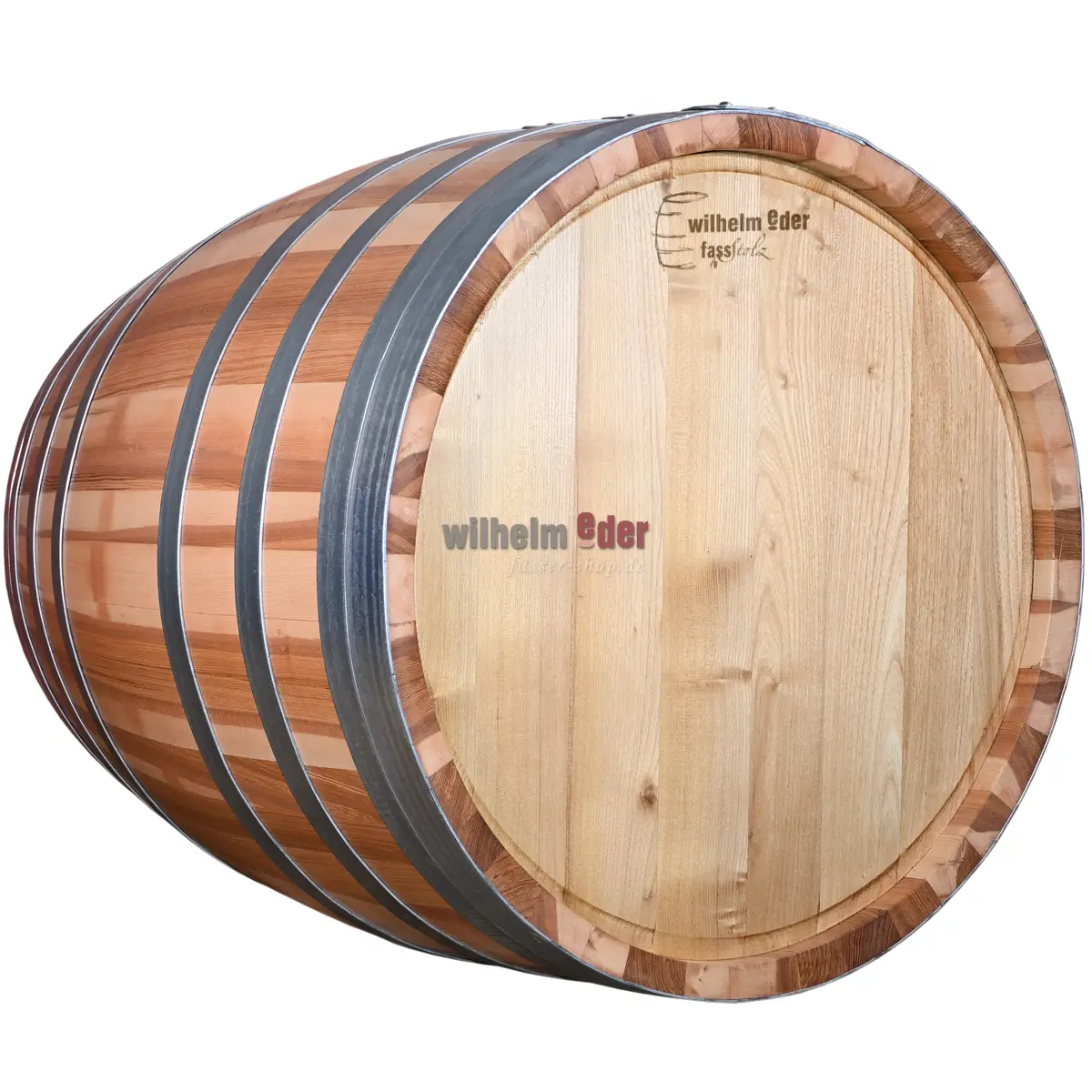
An innovation from our cooperage. A special settlement for aging fine distillates. The staves are made of ash and the barrel heads are made of acacia (robinia). The barrels were also medium toasted on the inside on the same woods by fire. All woods come from the Palatinate forest. The final treatment is a breathable varnish certified for food.Toast: Medium Equipped with hot galvanized hoops and silicone bung
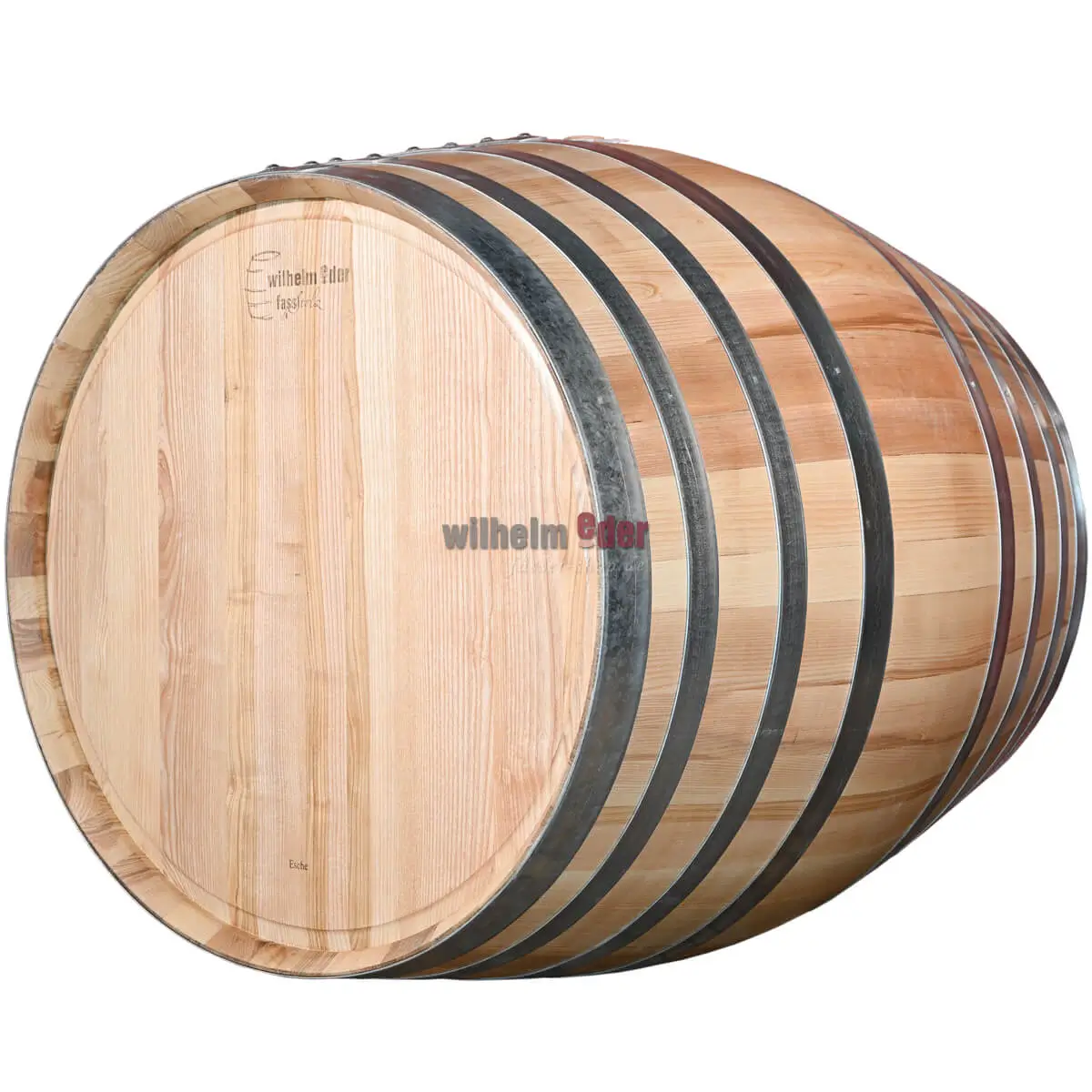
They are made from Ash wood (Fraxinus excelsior), an old wood type for barrel-making. The barrels are for aging of distillates, such as grain and fruit spirits, but without release some of its color. This wood ensures a balanced maturation through a restrained micro-oxygenation without colorants. The distillate matures in the pureness of its nature and the taste is pleasantly soft.
