


Origins
It all began in 1958 with the establishment of the Palatinate Forest Nature Park, which at the time was one of the first nature parks in Germany. Its primary aim was to preserve and develop a large-scale, largely untouched and near-natural landscape as a place of recreation and encounter between nature and people.
However, it was not until 1967 that the Palatinate Forest was officially placed under protection and renamed “Palatinate Forest Nature Park.” This protection was expanded by a state ordinance in 1984. The regulation aims to safeguard the landscape so that the diversity, uniqueness, and beauty of the region are preserved.
In 1992, the 179,000-hectare area was recognized by UNESCO (United Nations Educational, Scientific and Cultural Organization) as the 12th German biosphere reserve due to its exemplary and model character and was incorporated into the worldwide network of biosphere reserves.
Since 1998, the Palatinate Forest has formed the German part of the Palatinate Forest–Northern Vosges Biosphere Reserve. Across the border, joint projects are carried out to preserve the shared natural and cultural heritage.
Goals and Measures to Achieve Them
Enough history — what are the actual goals of this biosphere reserve? The primary objective is to conserve natural resources, prevent environmental pollution, and promote environmentally responsible behavior.
To achieve this, special development and funding programs are implemented. Research and environmental monitoring go hand in hand. This fosters a broad understanding of environmental relationships and establishes — and secures in the long term — harmonious coexistence between people and the living environment. Part of this work also includes developing exemplary and future-oriented concepts for protection, care, and sustainable development.
Beyond that, the Palatinate Forest–Northern Vosges Biosphere Reserve is also a living and economic space. As a cultural landscape shaped by generations of people, the Palatinate Forest is the foundation and lifeline for forestry, agriculture, viticulture, and tourism. Additionally, the forest serves as an important water reservoir, a source of fresh air, and a local recreation area. It offers residents a high quality of life and provides suitable habitats for a wide variety of animal and plant species.


Unique Landscape
The biosphere reserve consists of two land-use areas: the Palatinate Forest and the adjoining eastern Wine Route with its vineyards. The Palatinate Forest is intersected by three major stream valleys: Queich Valley, Hochspeyerbach Valley, and Isenach Valley. In addition, the low mountain range is structured by numerous side valleys.
Fun fact: The Palatinate Forest is the largest contiguous forest area in Germany!
Places of Interest
Numerous castles and castle ruins still stand in the Palatinate Forest, reminding visitors that during the Middle Ages this region was the center of the Holy Roman Empire in Germany and home to several Celtic tribes.
Some of the better-known castles include the Imperial Castle of Trifels, where a replica of the Imperial Regalia can be viewed. The visitor castle Berwartstein is famous for its underground vaults. Finally, another historically significant site is Hambach Castle, a symbol of the German people’s desire for freedom and their pursuit of democracy.
Along the Wine Route itself, the “sea of vines” attracts visitors with its sunken lanes, vineyard terraces, fruit and almond trees, and chestnut-rich forest edges. The wine villages display historically evolved townscapes that reflect the region’s wine culture. In the “Tuscany of Germany,” even figs, kiwis, and lemons ripen.
Fun fact: Some wine growers have even begun cultivating olives.

As a partner business of the biosphere reserve, we make a clear statement in favor of regionality and high-quality craftsmanship. Together with local forestry offices, the House of Sustainability, various restaurants, beekeepers, and others involved, we authentically provide knowledge, expertise, and responsibly sourced goods for discerning customers.
Our local forestry offices supply us with valuable timber that has been carefully nurtured over generations. As the only cooperage in the region, we saw the wood ourselves with great appreciation and ultimately refine it into wooden barrels or high-quality furniture in our carpentry workshop.
Together, we raise awareness, protect the forest, and take forward-looking care to ensure the continued existence of the forest and nature. Hiking areas, recreational zones, wildlife resting areas, and core conservation zones are consistently respected and protected.
Did you know? For 200 years, German forestry has consistently relied on sustainable forest growth. Since then, the forest has grown every second by the volume of a mid-size car!


Special offer 10 barrels in a set Our 190 l Whisky casks come from renowned whisky distilleries. The barrels were used for many years before being shipped to us, freshly emptied.An eye-catching item, table or bar, these barrels are very practical due to their slim design. Our decorative barrels are mainly suitable for outdoor use. Every oak barrel is unique.The different colorations are caused by the valuable contents that they once contained. Small notches in the wood or small bumps are not quality defects but rather determined by the nature of the construction and the prior use of the barrels. Hardly any other piece of furniture exudes as much authenticity, zing and the feel-good factor as a wooden barrel, because they each tell a different story. All pictures are sample pictures, color variations possible.
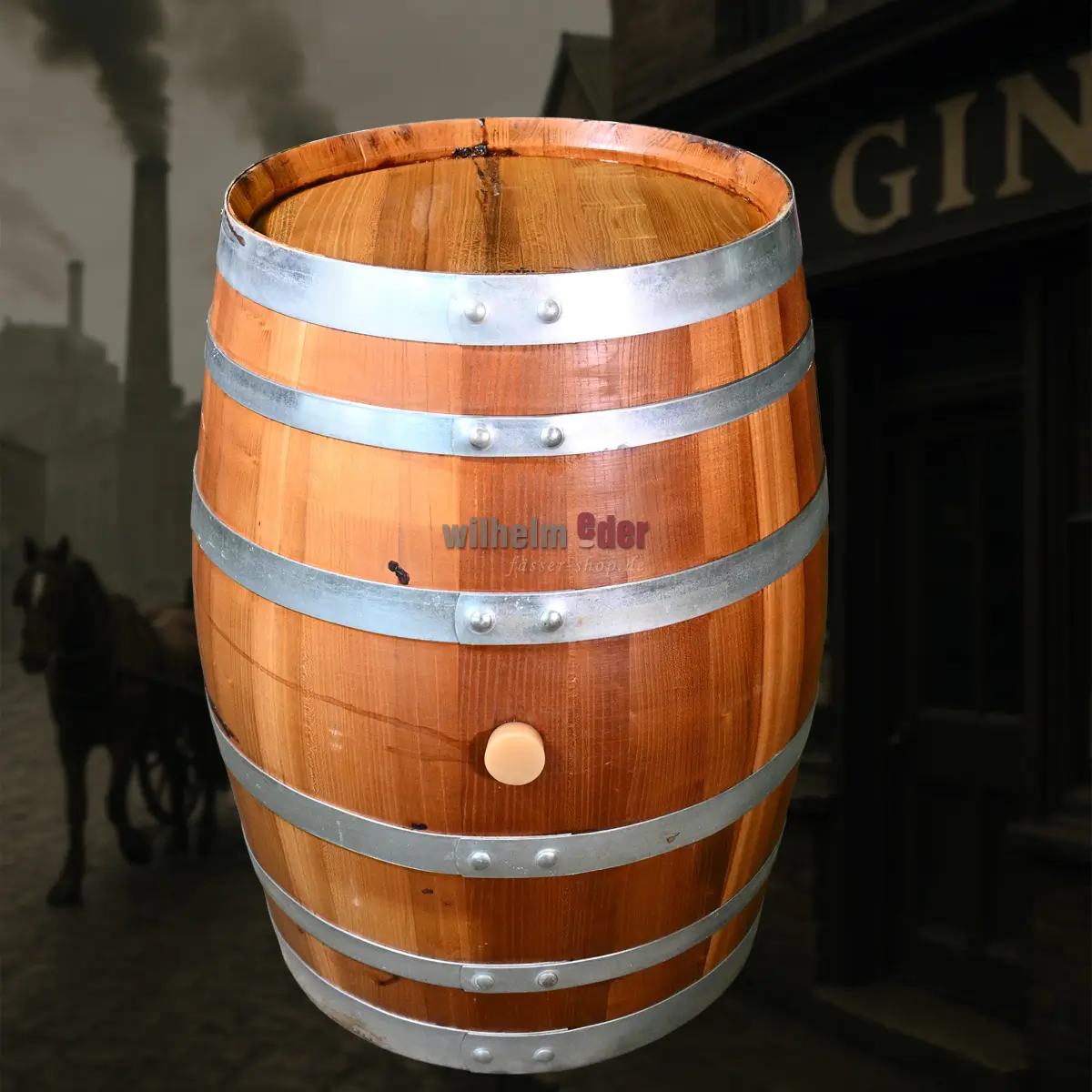
Gin barrel with a capacity of 110 liters - formerly used in one of the top gin distilleries in Germany.Thanks to their narrow design, these barrels are ideal as decorative eye-catchers, bar tables or bars.Our decorative barrels are mainly suitable for outdoor use. However, if you would like to place the barrel in heated rooms, we strongly recommend having the staves glued by our coopers. This is the only way to ensure that your barrel remains stable for a long time.Every oak barrel is unique. Different colorations are the result of the precious contents that were once stored in it. Small nicks in the wood or minor unevenness are not quality defects, but are rather determined by the unique construction method and the previous use of the barrels. Hardly any other piece of furniture exudes as much authenticity, esprit and feel-good atmosphere as a wooden barrel, with each one telling a different story from days gone by.All pictures are examples, color deviations possible

Whisky cask with 125 l capacity - called a Quarter Cask - a "must" for every whisky lover. Our 125 l Whisky casks come from renowned whisky distilleries. There the barrels are usually occupied for many years and are then shipped to us freshly emptied. As a decorative eye-catcher, high table or bar, these barrels are very well suited thanks to their slim design. Due to the relatively short covering with distillate, the barrels show traces of use, but still have little patina. Each barrel is unique, especially if you want to use it outdoors the look will change over time, so you can be sure that you have bought a unique. Our decorative barrels are mainly suitable for outdoor use. If you still want to place the barrel in heated rooms, we strongly recommend to have the staves glued by our coopers. (Can be ordered under accessories). This is the only way to ensure that your barrel remains stable for a long time. Every oak barrel is unique. Different colorations arose from the precious content that once stored them. Small notches in the wood or small bumps are not quality defects but rather determined by the nature of the construction and the prior use of the barrels. All pictures are sample pictures, color variations possible Delivery of the barrels only unsorted while stocks last and excluded from exchange.
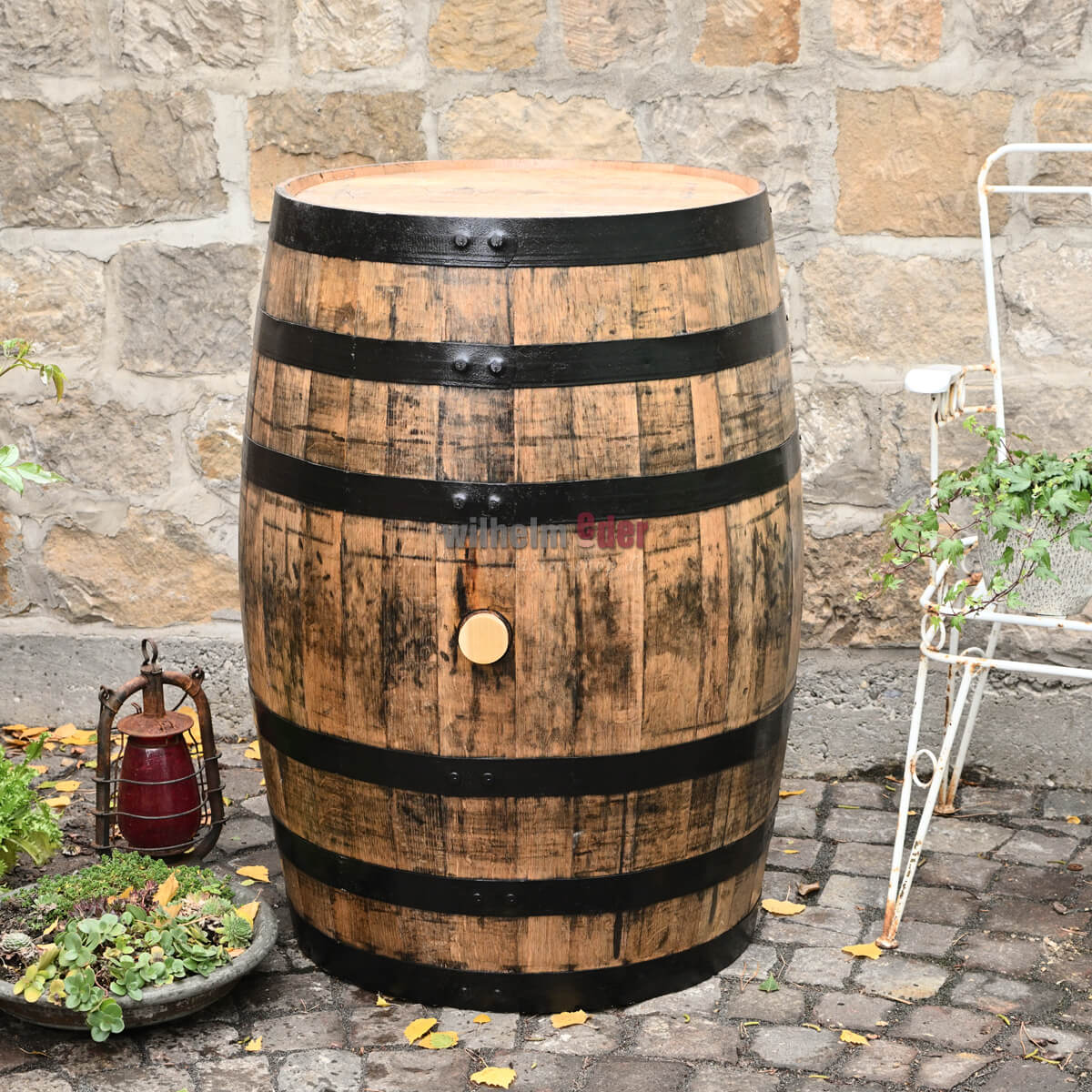
Freshly emptied original Jack Daniel’s barrels from Tennessee. The metal hoops of this beautiful decoration barrel have been painted black in our cooperage. This barrel is boat-coating varnished with linseed oil completely and it equipped with a wooden or silicon bung. Our decorative barrels are mainly suitable for outdoor use. If you still want to place the barrel in heated rooms, we strongly recommend to have the staves glued by our coopers. This is the only way to ensure that your barrel will remain stable for a long time. We put our attention on highest authenticity possible for this product; this means that this type of shelf barrel has been stored and moved in the warehouses of various distilleries.The notches in wood or an uneven ground in circumstances is not a quality defect, but rather defined by the characteristics of the barrel shape and prior use.
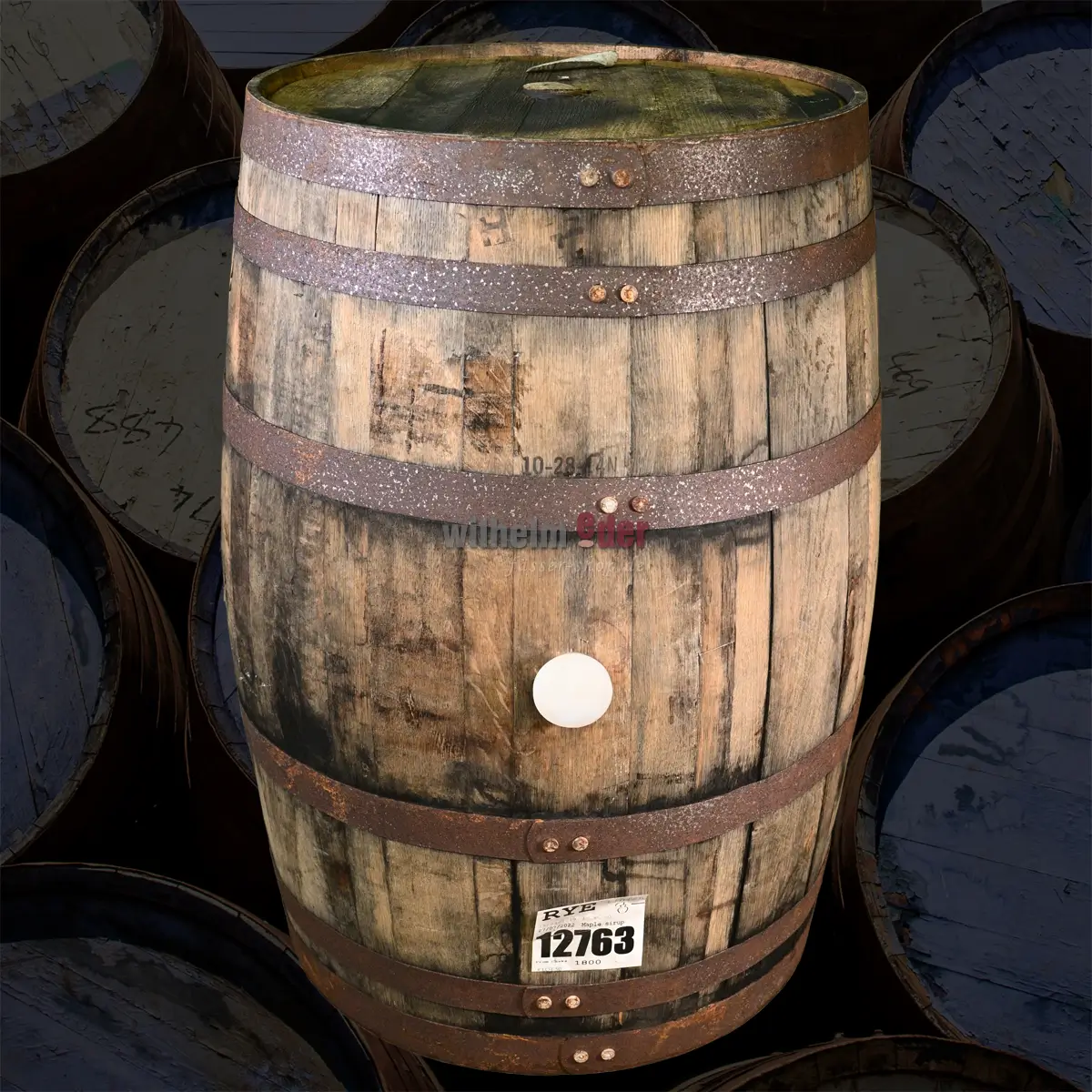
Our 190 l Whiksy casks come from renowned whisky distilleries. There the barrels are usually occupied for many years and are then shipped to us freshly emptied.As a decorative eye-catcher, high table or bar, these barrels are very well suited thanks to their slim design.Due to the relatively short covering with distillate, the barrels show traces of use, but still have little patina. Each barrel is unique, especially if you want to use it outdoors the look will change over time, so you can be sure that you have bought a unique.Our decorative barrels are mainly suitable for outdoor use.If you still want to place the barrel in heated rooms, we strongly recommend to have the staves glued by our coopers. (Can be ordered under accessories). This is the only way to ensure that your barrel remains stable for a long time. Every oak barrel is unique. Different colorations arose from the precious content that once stored them. Small notches in the wood or small bumps are not quality defects but rather determined by the nature of the construction and the prior use of the barrels. All pictures are sample pictures, color variations possibleDelivery of the barrels only unsorted while stocks last and excluded from exchange.
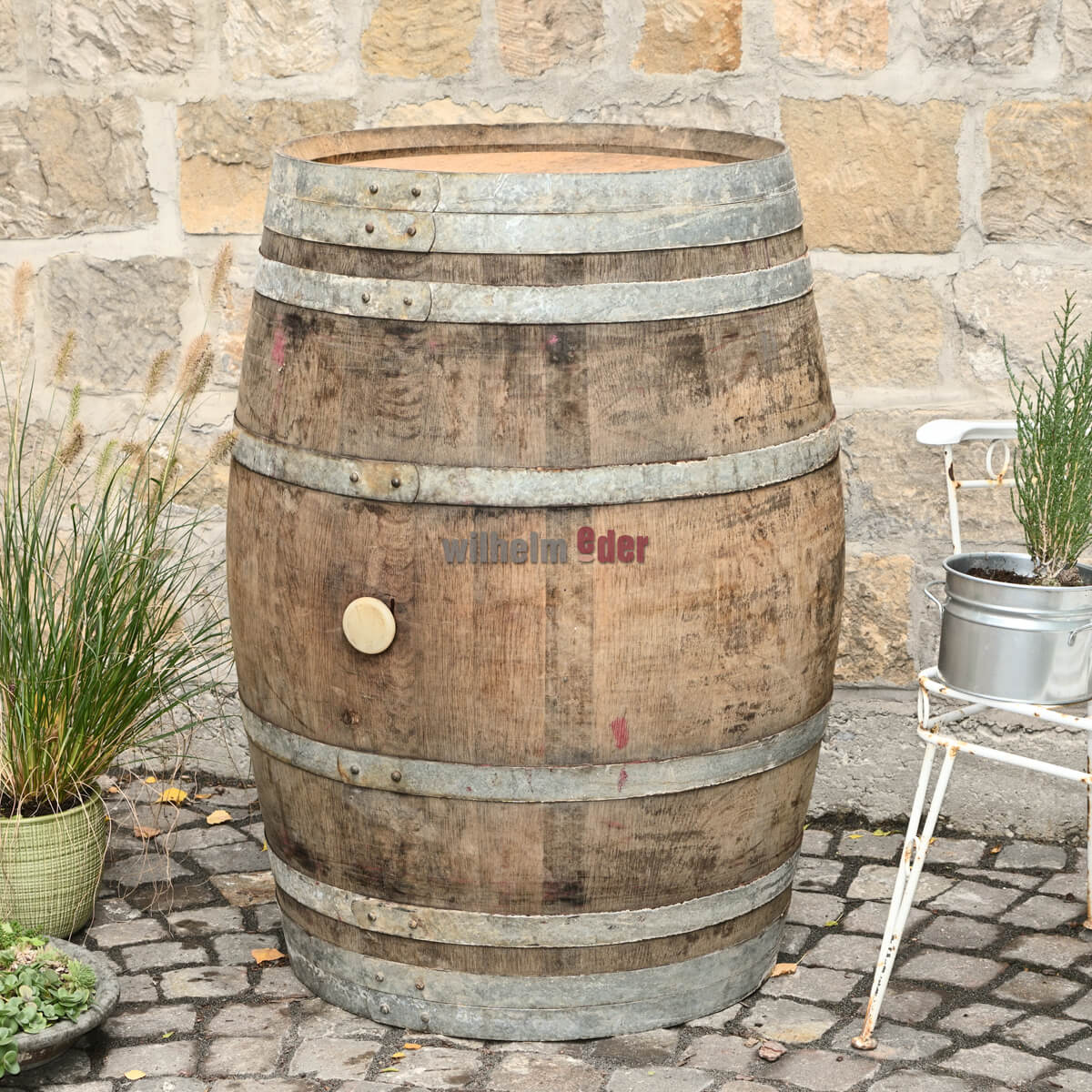
Used Barrique 225 l – 228 l in the Burgundy or Bordeaux style made of oak with black or galvanized hoops. The barrels show some signs of wear and tear and and some have red wine spots. Color variations are possible. Some of the barrels are fitted with wooden hoops and the metal hoops might show signs of rust. The barrels are technically in good condition but but can no longer be used for foodstuffs. Before the barrels are shipped, they are cleaned with a high pressure hose and the hoops are tightened. The barrels are sold unsorted and no prior selection is possible.Our decorative barrels are mainly suitable for outdoor use.If you still want to place the barrel in heated rooms, we highly recommend that the staves are glued by our coopers. (This choice can be selected under 'Accessories').In this way, your barrel will remain in a stable condition for a long time. Every oak barrel is unique.The different colorations are caused by the valuable contents that they once contained. Small notches in the wood or small bumps are not quality defects but rather caused by how it was made and how the barrel was used. Hardly any other piece of furniture spreads so much authenticity, Spirit and feel-good atmosphere like a wooden barrel, each telling a different story from days gone by. When selecting a location, please note that tannins or residues from the previous storage may be washed out under certain circumstances. If you have any questions about the placement of your decorative barrel, we will be happy to help and advise you. All images are sample images, color variations are possible. Barrels are only available unsorted, while stocks last and cannot be exchanged.
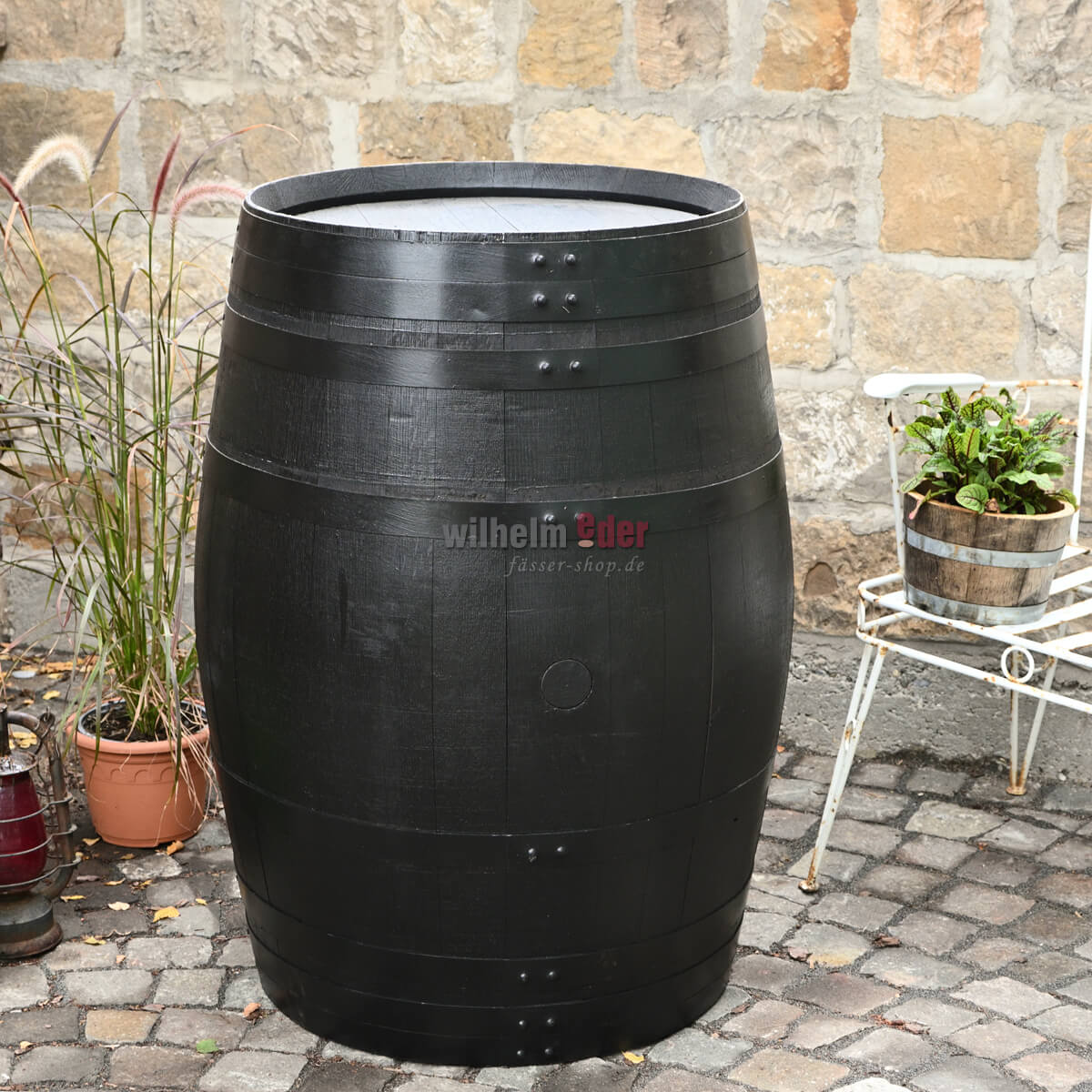
A lovely, used 225 l oak barrique barrel. This lacquered barrel is a nice decorational element for everyone who likes the color black. The barrels are ideal to be used as a table, for decoration or as a display unit. The barrels are technically in a good condition but can no longer be used for foodstuffs. Before the barrels are shipped, they are cleaned with a high pressure hose and the hoops are tightened. Our decorative barrels are mainly suitable for outdoor use.If you still want to place the barrel in heated rooms, we highly recommend that the staves are glued by our coopers. (This choice can be selected under 'Accessories').Your barrel will then remain in a stable condition for a long time. Every oak barrel is unique.The different colorations are caused by the valuable contents that they once contained. Small notches in the wood or small bumps are not quality defects but rather caused by how it was made and how the barrel was used. Hardly any other piece of furniture exudes as much authenticity, zing and the feel-good factor as a wooden barrel, because they each tell a different story.
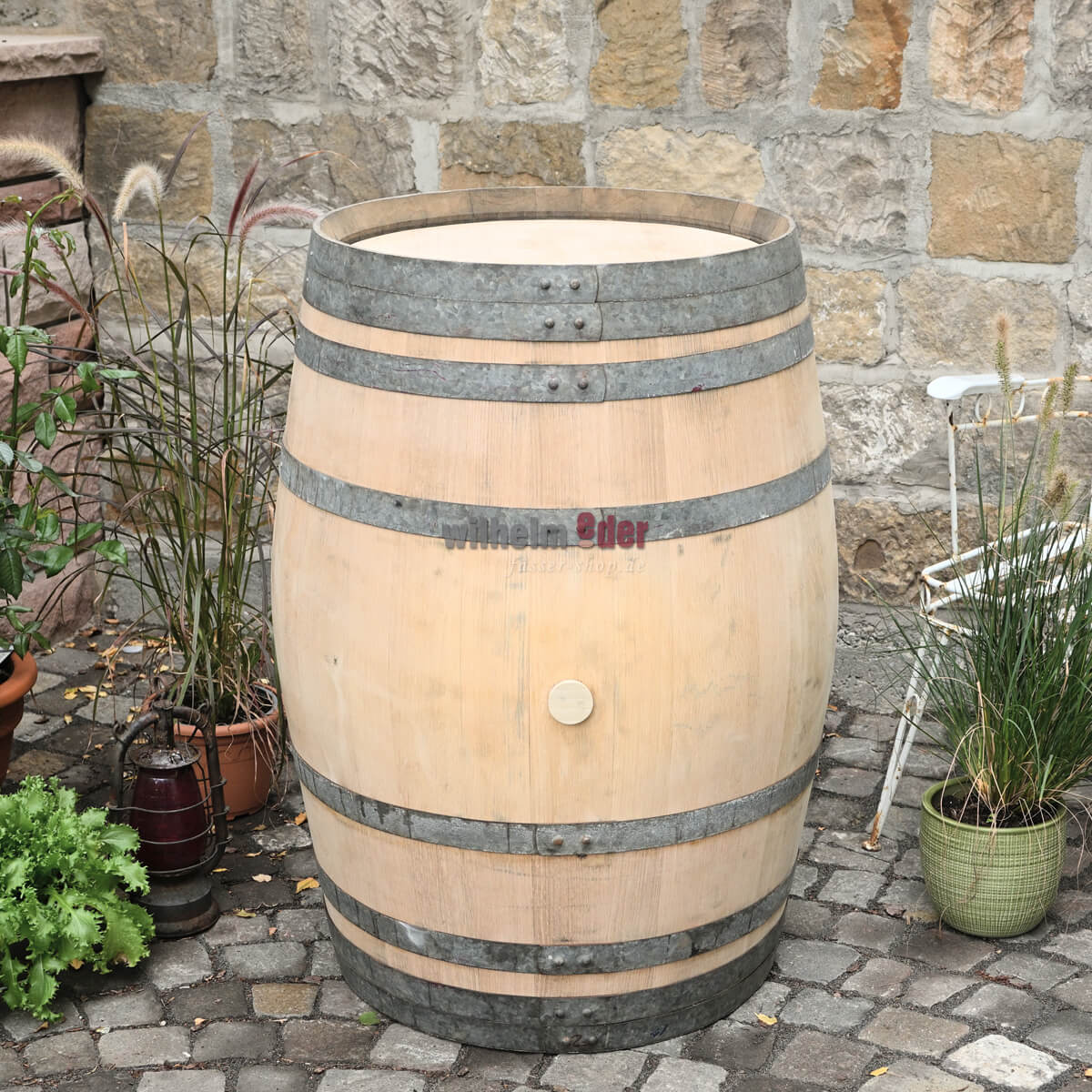
A lovely, light polished, used barrique barrel 225 l made of top quality oak, fitted with galvanised hoops. The barrels are ideal to be used as a table, for decoration or as a display unit. Some of the galvanised hoops have some rust. The barrels are technically in a good condition but can no longer be used for foodstuffs.Our decorative barrels are mainly suitable for outdoor use.If you still want to place the barrel in heated rooms, we highly recommend that the staves are glued by our coopers. (This choice can be selected under 'Accessories').Your barrel will then remain in a stable condition for a long time. Every oak barrel is unique.The different colorations are caused by the valuable contents that they once contained. Small notches in the wood or small bumps are not quality defects but rather caused by how it was made and how the barrel was used. Hardly any other piece of furniture exudes as much authenticity, zing and the feel-good factor as a wooden barrel, because they each tell a different story. When selecting a location, please note that tannins or residues from the previous storage may be washed out under certain circumstances. If you have any questions about the placement of your decorative barrel, we will be happy to help and advise you. All pictures are sample pictures, color variations are possible.
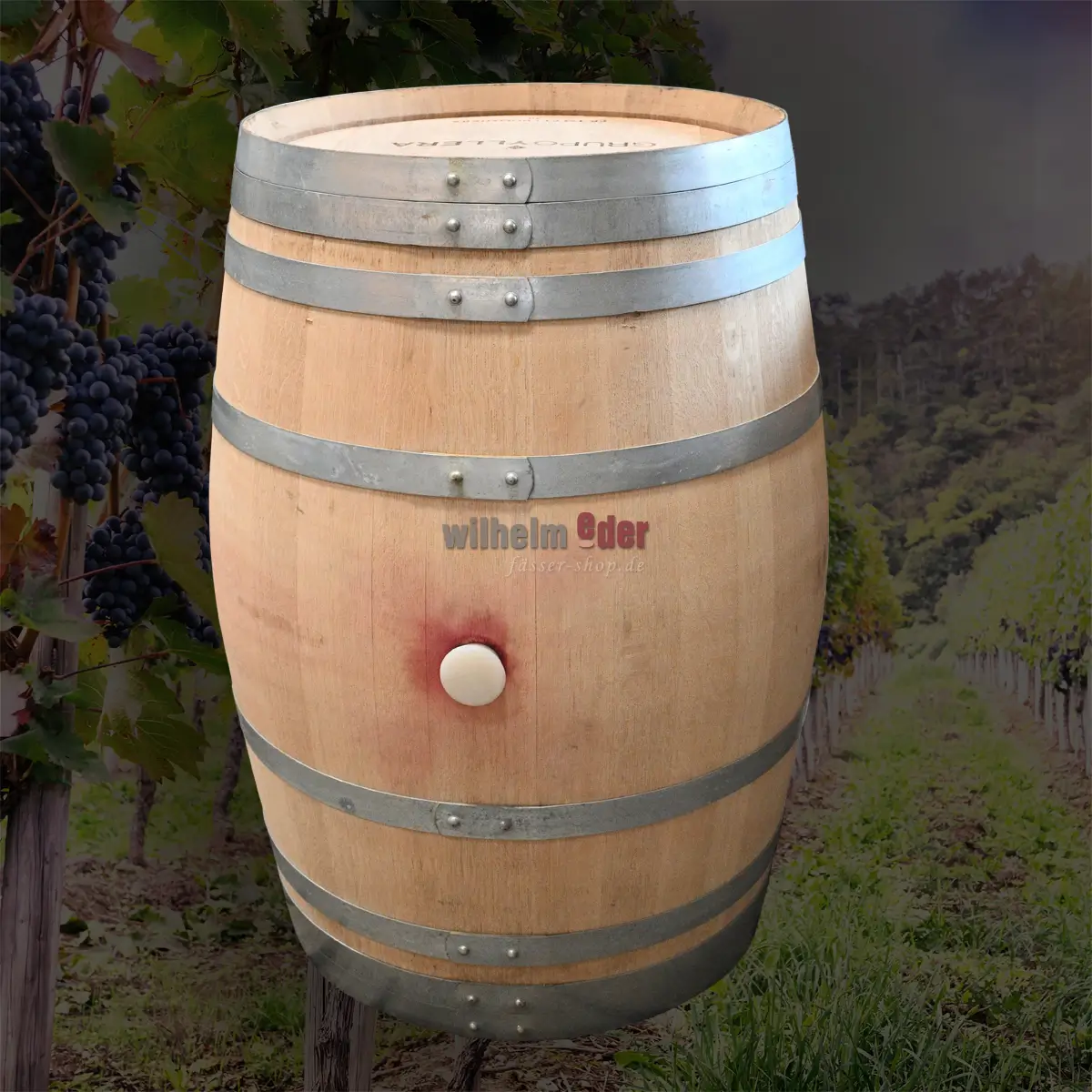
Very nice, bright and used barrique barrel 225 l made of oak wood with traces of red wine of the first choice. Equipped with galvanized hoops. The barrels can be used very well as a bar table, for decoration or as a display. Some of the galvanized tires have some flash rust and the barrels have a natural, bright appearance. The barrels are technically in good condition, but are no longer suitable for food use. They are cleaned with high pressure before shipping and the tires are shot tight, some of the barrels are equipped with a crossbar in the head.Our decorative barrels are mainly suitable for outdoor use.However, if you would like to place the barrel in heated rooms, we strongly recommend having the staves glued by our coopers. (Can be ordered under accessories). This is the only way to ensure that your barrel remains stable for a long time.Each oak barrel is unique. Different colorations are caused by the precious contents that were once stored in it. Small nicks in the wood or minor unevenness are not quality defects, but rather a result of the unique construction method and the previous use of the barrels. Hardly any other piece of furniture exudes as much authenticity, esprit and feel-good atmosphere as a wooden barrel, with each one telling a different story from days gone by. When selecting a location, please note that tannins or residues from the previous storage may be washed out under certain circumstances. If you have any questions about the placement of your decorative barrel, we will be happy to help and advise you.All pictures are examples, color deviations possible

A lovely, rejuvenated, light coloured barrique barrel 225 l finished off with black hoops. The barrels are ideal to be used as a table, decorative piece or as a display unit. The galvanised hoops show some signs of rust and the barrel exudes a natural and bright finish. The barrels are technically in a good condition but can no longer be used for foodstuffs. Before the barrels are shipped, they are cleaned with a high pressure hose and the hoops are tightened. Our decor barrels are mainly suitable for outdoor use.If you still want to place the barrel in heated rooms, we highly recommend that the staves are glued by our coopers. (This choice can be selected under 'Accessories').Your barrel will then remain in a stable condition for a long time.Every oak barrel is unique.The different colorations are caused by the valuable contents that they once contained. Small notches in the wood or small bumps are not quality defects but rather caused by how it was made and how the barrel was used. Hardly any other piece of furniture exudes as much authenticity, zing and the feel-good factor as a wooden barrel, because they each tell a different story. When selecting a location, please note that tannins or residues from the previous storage may be washed out under certain circumstances. If you have any questions about the placement of your decorative barrel, we will be happy to help and advise you.